Diffuse Muscle Tenderness in His Back, Chest and Legs
Low back pain and neck pain Neck Pain Along with low back pain, neck pain is a very common reason for health care visits. The pain usually results from problems with the musculoskeletal system—the spine, including the bones of the... read more are among the most common reasons for health care visits. The pain usually results from problems with the musculoskeletal system Introduction to the Biology of the Musculoskeletal System The musculoskeletal system provides form, stability, and movement to the human body. It consists of the body's bones (which make up the skeleton), muscles, tendons, ligaments, joints, cartilage... read more —most notably the spine, including the bones of the spine (back bones, or vertebrae), disks, and the muscles Muscles There are three types of muscles: Skeletal Smooth Cardiac (heart) Two of these kinds—skeletal and smooth—are part of the musculoskeletal system. read more and ligaments Ligaments Ligaments are tough fibrous cords composed of connective tissue that contains both collagen and elastic fibers. The elastic fibers allow the ligaments to stretch to some extent. Ligaments surround... read more that support it. Occasionally, low back pain results from a disorder that does not involve the musculoskeletal system.
Low back pain becomes more common as people age, affecting more than half of people over 60. It is very costly in terms of health care payments, disability payments, and missed work.
The spine (spinal column) consists of back bones (vertebrae). There are shock-absorbing disks between each of the vertebrae. The disks have a tough, outer layer of fibrocartilage and a soft, jelly-like interior called the nucleus. Each of the vertebrae have two joints behind the disks. The joints are called facet joints. The facets of one vertebral body rest on the facets of the one below it, forming a joint. The facet joints and thus the spine are stabilized by ligaments and muscles, which include the following:
-
Two iliopsoas muscles, which run along both sides of the spine
-
Two erector spinae muscles, which run along the length of the spine behind it
-
Many short paraspinal muscles, which run between the vertebrae
The abdominal muscles, which run from the bottom of the rib cage to the pelvis, also help stabilize the spine by supporting the abdominal contents. The muscles in the buttocks also help stabilize the spine. All together, these muscles are referred to as the core muscles.
The lower spine (lumbar spine) connects to the spine in the upper back (thoracic spine) above and to the pelvis through the (sacrum). The lumbar spine is flexible to allow turning, twisting and bending, and provides strength—for standing, walking, and lifting. Thus, the lower back is involved in almost all activities of daily living. Low back pain can limit many activities and reduce the quality of life.
Common types of back pain include local, radiating, and referred pain.
Local pain occurs in a specific area of the lower back. It is the most common type of back pain. The cause is usually a small disk injury, joint arthritis, and rarely muscle sprains and strains. The pain may be constant and aching or, at times, intermittent and sharp. Sudden pain may be felt when an injury is the cause. Local pain can be aggravated or relieved by changes in position. The lower back may be sore when touched. Muscle spasms may occur.
Radiating pain is pain that travels from the lower back down the leg. The pain can be a dull ache or be sharp and intense. It typically involves only the side or back of the leg and may travel all the way to the foot or only to the knee. Radiating pain typically indicates compression of a nerve root caused by disorders such as a herniated disk Herniated Disk A herniated disk occurs when the tough covering of a disk in the spine tears or ruptures. The soft, jelly-like interior of the disk may then bulge out (herniate) through the covering. Aging... read more  , sciatica Sciatica Sciatica is pain along the sciatic nerves. These nerves run from the lower back, through the buttocks, and down the legs, ending just below the knee. A herniated disk, complications of osteoarthritis... read more
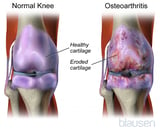
  , osteoarthritis Osteoarthritis (OA) Osteoarthritis is a chronic disorder that causes damage to the cartilage and surrounding tissues and is characterized by pain, stiffness, and loss of function. Arthritis due to damage of joint... read more
  , or spinal stenosis Compression of the Spinal Cord Injuries and disorders can put pressure on the spinal cord, causing back or neck pain, tingling, muscle weakness, and other symptoms. The spinal cord may be compressed by bone, blood (hematomas)... read more . Coughing, sneezing, straining, or bending over while keeping the legs straight may trigger the pain. If there is pressure on the nerve root, the pain may be accompanied by muscle weakness in the leg, a pins-and-needles sensation, or even loss of sensation. Rarely, people lose bladder control Urinary Incontinence in Adults Urinary incontinence is involuntary loss of urine. Incontinence can occur in both men and women at any age, but it is more common among women and older people, affecting about 30% of older women... read more
 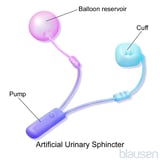 (urinary incontinence) or bowel control Fecal Incontinence Fecal incontinence is the loss of control over bowel movements. Fecal incontinence can occur briefly during bouts of diarrhea or when hard stool becomes lodged in the rectum (fecal impaction)... read more (fecal incontinence).
Most back pain is caused by disorders of the spine and the joints, muscles, ligaments, and nerve roots around it or the disks between vertebrae. Often, no single specific cause can be identified. Any painful disorder of the spine may cause reflex tightening (spasm) of muscles around the spine. This spasm may worsen the existing pain. Stress may worsen low back pain, but how it does so is unclear.
Occasionally, back pain is due to disorders outside the spine, such as cancer, gynecologic disorders (for example, premenstrual syndrome Premenstrual Syndrome (PMS) Premenstrual syndrome (PMS) is a group of physical and psychologic symptoms that start several days before and usually end a few hours after a menstrual period begins. Premenstrual dysphoric... read more ), disorders of the kidneys (for example, kidney stones Stones in the Urinary Tract read more ) and urinary (for example, infections of the kidney Kidney Infection Pyelonephritis is a bacterial infection of one or both kidneys. Infection can spread up the urinary tract to the kidneys, or uncommonly the kidneys may become infected through bacteria in the... read more , bladder Bladder Infection Cystitis is infection of the bladder. Usually, bacteria are the cause of cystitis. A frequent need to urinate and pain or burning while urinating are the most common symptoms. Doctors can often... read more  , and prostate gland Prostatitis Prostatitis is pain and swelling, inflammation, or both of the prostate gland. The cause is sometimes a bacterial infection. Pain can occur in the area between the scrotum and anus or in the... read more ) and digestive tracts (for example, diverticulitis Diverticulitis Diverticulitis is inflammation of one or more balloon-like sacs (diverticula). Infection may or may not develop. Diverticulitis usually affects the large intestine (colon). Left lower abdominal... read more
 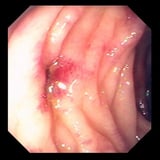 ), and disorders of major arteries near the spine.
Common causes of low back pain include
-
Injuries to muscles and ligaments
Injuries may occur during routine activities (for example, lifting, exercising, moving in an unexpected way) or result from trauma, such as a fall or car crash. Often no specific injured structures are identified with imaging tests, but doctors presume that some muscles and/or ligaments have been affected.
A ruptured or herniated disk Herniated Disk A herniated disk occurs when the tough covering of a disk in the spine tears or ruptures. The soft, jelly-like interior of the disk may then bulge out (herniate) through the covering. Aging... read more can cause low back pain. A disk has a tough outer layer and a soft, jelly-like interior. If a disk is repeatedly overloaded by the vertebrae above and below it (as when bending forward, particularly when lifting a heavy object), the outer layer may tear (rupture), causing pain. The interior of the disk can squeeze through the tear, so that part of the interior bulges out (herniates). This bulge can compress, irritate, and even damage the spinal nerve root next to it, causing more pain and symptoms that are felt in one or both legs. A ruptured or herniated disk in the low back that affects nerves commonly causes sciatica Sciatica Sciatica is pain along the sciatic nerves. These nerves run from the lower back, through the buttocks, and down the legs, ending just below the knee. A herniated disk, complications of osteoarthritis... read more . However, imaging studies such as magnetic resonance imaging (MRI) often show bulging disks in people who have no symptoms or problems.
Lumbar spinal stenosis Lumbar Spinal Stenosis Lumbar spinal stenosis is narrowing of the spinal canal in the lower back. The narrowing squeezes (compresses) the nerves that travel through the lower back into the legs. Osteoarthritis, injuries... read more is narrowing of the spinal canal, which runs through the center of the spine and contains the spinal cord and the bundle of nerves that extends downward from the bottom of the spinal cord in the lower back. It is a common cause of low back pain in older people. Spinal stenosis also develops in middle-aged people who were born with a narrow spinal canal. Spinal stenosis is caused by such disorders as osteoarthritis Osteoarthritis (OA) Osteoarthritis is a chronic disorder that causes damage to the cartilage and surrounding tissues and is characterized by pain, stiffness, and loss of function. Arthritis due to damage of joint... read more , spondylolisthesis Spondylolisthesis Spondylolisthesis is partial displacement of a bone in the lower back. Injuries or a degenerative condition can cause this disorder. Pain is felt in the low back and may travel down one or both... read more  , ankylosing spondylitis Ankylosing Spondylitis Ankylosing spondylitis is a spondyloarthritis characterized by inflammation of the spine (spondylitis), large joints, and fingers and toes, resulting in stiffness and pain. Prolonged joint pain... read more
  , and Paget disease of bone Paget Disease of Bone Paget disease of bone is a chronic disorder of the skeleton in which areas of bone undergo abnormal turnover, resulting in areas of enlarged and softened bone. The breakdown and formation of... read more
  .
.
Less common causes of low back pain include
-
Spinal infections
-
Certain disorders involving the pelvis, such as ectopic pregnancy Ectopic Pregnancy Ectopic pregnancy is attachment (implantation) of a fertilized egg in an abnormal location. In an ectopic pregnancy, the fetus cannot survive. When an ectopic pregnancy ruptures, women often... read more , pelvic inflammatory disease Pelvic Inflammatory Disease (PID) Pelvic inflammatory disease is an infection of the upper female reproductive organs (the cervix, uterus, fallopian tubes, and ovaries). Pelvic inflammatory disease is usually transmitted during... read more
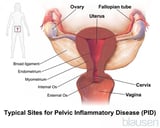 , and cancer of the ovaries Ovarian Cancer Ovarian cancer, which typically starts on the surface of the ovaries, is not usually diagnosed until it is advanced. Ovarian cancer may not cause symptoms until it is large or has spread. If... read more or other reproductive organs Overview of Female Reproductive System Cancers Cancers can occur in any part of the female reproductive system—the vulva, vagina, cervix, uterus, fallopian tubes, or ovaries. These cancers are called gynecologic cancers. The most common... read more
The doctor aims to identify any serious disorders. Because low back pain is often caused by several problems, diagnosing a single cause may not be possible. Doctors may only be able to tell that the cause is a musculoskeletal disorder and how serious it is likely to be.
In people with low back pain, certain symptoms and characteristics are cause for concern. They include
-
A history of cancer
-
Use of drugs that suppress the immune system Some Drugs That Can Cause Immunodeficiency Immunodeficiency disorders involve malfunction of the immune system, resulting in infections that develop and recur more frequently, are more severe, and last longer than usual. Immunodeficiency... read more , HIV infection or AIDS Human Immunodeficiency Virus (HIV) Infection Human immunodeficiency virus (HIV) infection is a viral infection that progressively destroys certain white blood cells and can cause acquired immunodeficiency syndrome (AIDS). HIV is transmitted... read more
 , use of injected drugs Injection Drug Use Drugs may be swallowed, smoked, inhaled through the nose as a powder (snorted), or injected. When drugs are injected, their effects may occur more quickly, be stronger, or both. Drugs may be... read more
  , recent surgery, or a wound—conditions that increase the risk of infection
 -
Numbness, weakness in one or both legs, difficulty emptying the bladder (retention of urine) Urinary Retention Urinary retention is inability to urinate or incomplete emptying of the bladder. People who have incomplete emptying of the bladder may have urinary frequency or urinary incontinence. If the... read more , or loss of bladder or bowel control (urinary incontinence Urinary Incontinence in Adults Urinary incontinence is involuntary loss of urine. Incontinence can occur in both men and women at any age, but it is more common among women and older people, affecting about 30% of older women... read more
or fecal incontinence Fecal Incontinence Fecal incontinence is the loss of control over bowel movements. Fecal incontinence can occur briefly during bouts of diarrhea or when hard stool becomes lodged in the rectum (fecal impaction)... read more )—symptoms that suggest nerve damage or spinal cord compression Compression of the Spinal Cord Injuries and disorders can put pressure on the spinal cord, causing back or neck pain, tingling, muscle weakness, and other symptoms. The spinal cord may be compressed by bone, blood (hematomas)... read more -
Fever
-
Weight loss
-
Severe pain at night
-
Vomiting, severe abdominal pain, or stool that is black or bloody—symptoms that suggest a digestive disorder
-
Difficulty urinating, blood in the urine, or severe crampy pain on one side radiating into the groin—symptoms that suggest a urinary tract disorder
Doctors ask questions about the pain:
-
What is the pain like?
-
How severe is it?
-
Where is it and where does it radiate to?
-
What relieves or worsens it (for example, changes in position or weight bearing)?
-
When and how did it start?
-
Are there other symptoms (such as numbness, weakness, retention of urine, or incontinence)?
Certain characteristics of the pain can give clues to possible causes:
-
Pain in an area that is tender to the touch and is worsened by changes in position or weight bearing is usually local pain.
-
Pain that radiates down the leg, such as sciatica, is usually caused by compression of a spinal nerve root.
-
Pain that is not affected by changes in position of the back and is not accompanied by tenderness may be referred pain.
-
Pain that is constant, severe, progressively worse, and unrelieved by rest, particularly if it keeps the person awake at night, can be a disk herniation but may indicate cancer or an infection.
With information about the pain, the person's medical history, and results of a physical examination, doctors may be able to determine the possible cause.

Usually, no tests are needed because most back pain results from osteoarthritis, strains and sprains, or other minor musculoskeletal disorders and resolves within 6 weeks. Imaging tests are often needed if
-
Another cause is suspected
-
Back pain persists
People who did not respond to initial treatment or those whose symptoms have worsened or changed may also undergo testing.
X-rays of the lower back show only the bones. They can help detect degenerative changes due to osteoarthritis Osteoarthritis (OA) Osteoarthritis is a chronic disorder that causes damage to the cartilage and surrounding tissues and is characterized by pain, stiffness, and loss of function. Arthritis due to damage of joint... read more , vertebral compression fractures Compression Fractures of the Spine In a compression fracture of the spine, the drum-shaped part (body) of one or more back bones (vertebrae) collapses into itself and becomes squashed (compressed) into a wedge shape. Most compression... read more 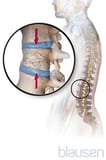 , spondylolisthesis Spondylolisthesis Spondylolisthesis is partial displacement of a bone in the lower back. Injuries or a degenerative condition can cause this disorder. Pain is felt in the low back and may travel down one or both... read more , and ankylosing spondylitis Ankylosing Spondylitis Ankylosing spondylitis is a spondyloarthritis characterized by inflammation of the spine (spondylitis), large joints, and fingers and toes, resulting in stiffness and pain. Prolonged joint pain... read more . However, magnetic resonance imaging Magnetic Resonance Imaging (MRI) In magnetic resonance imaging (MRI), a strong magnetic field and very high frequency radio waves are used to produce highly detailed images. MRI does not use x-rays and is usually very safe... read more
 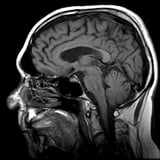 (MRI) or computed tomography Computed Tomography (CT) In computed tomography (CT), which used to be called computed axial tomography (CAT), an x-ray source and x-ray detector rotate around a person. In modern scanners, the x-ray detector usually... read more
 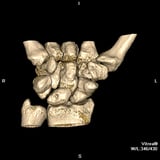 (CT) provides clearer images of bones and, particularly MRI, can show soft tissues (including disks and some nerves). MRI or CT is usually necessary when doctors are checking for disorders that cause subtle changes in bone and disorders of soft tissue. For example, MRI or CT can confirm or exclude the diagnosis of a herniated disk Diagnosis A herniated disk occurs when the tough covering of a disk in the spine tears or ruptures. The soft, jelly-like interior of the disk may then bulge out (herniate) through the covering. Aging... read more , spinal stenosis, cancer, and usually infection. These tests can also indicate whether nerves are being compressed.
If compression of the spinal cord is suspected, MRI is done immediately. Rarely, when results of MRI are unclear, myelography Myelography Diagnostic procedures may be needed to confirm a diagnosis suggested by the medical history and neurologic examination. Electroencephalography (EEG) is a simple, painless procedure in which... read more  with CT is required. Rarely, if cancer or infection is suspected, removal of tissue (biopsy) is necessary. Occasionally, electromyography and nerve conduction studies Electromyography and Nerve Conduction Studies Diagnostic procedures may be needed to confirm a diagnosis suggested by the medical history and neurologic examination. Electroencephalography (EEG) is a simple, painless procedure in which... read more are done to confirm the presence, location, and sometimes duration and severity of nerve root compression.
People can reduce their risk of developing low back pain by doing the following:
-
Exercising
-
Strengthening and stretching muscles
-
Maintaining a healthy weight
-
Maintaining good posture
-
Using proper lifting techniques
The most effective way to prevent low back pain is to exercise regularly. Aerobic exercise and specific muscle-strengthening and stretching exercises can help.
Aerobic exercise, such as swimming and walking, improves general fitness and generally strengthens muscles.
Specific exercises to strengthen and stretch the muscles in the abdomen, buttocks, and back (the core muscles) can help stabilize the spine and decrease strain on the disks that cushion the spine and the ligaments that hold it in place.
Muscle-strengthening exercises include pelvic tilts and abdominal curls. Stretching exercises include the knee-to-chest stretch. Stretching exercises can increase back pain in some people and therefore should be done carefully. As a general rule, any exercise that causes or increases back pain should be stopped. Exercises should be repeated until the muscles feel mildly but not completely fatigued. Breathing during each exercise is important. People who have back pain should consult a doctor before beginning to exercise.
Exercises to Prevent Low Back Pain
| Pelvic Tilts Lie on the back with the knees bent, the heels on the floor, and the weight on the heels. Press the small of the back against the floor, contract the buttocks (raising them about half an inch [1 cm] from the floor), and contract the abdominal muscles. Hold this position for a count of 10. Repeat 20 times. | |
| Abdominal Curls Lie on the back with the knees bent and feet on the floor. Place the hands across the chest. Contract the abdominal muscles, slowly raising the shoulders about 10 inches (25 cm) from the floor while keeping the head back (the chin should not touch the chest). Then release the abdominal muscles, slowly lowering the shoulders. Do 3 sets of 10. | |
| Knee-to-Chest Stretch Lie flat on the back. Place both hands behind one knee and bring it to the chest. Hold for a count of 10. Slowly lower that leg and repeat with the other leg. Do this exercise 10 times. |
Maintaining good posture when standing and sitting reduces stress on the back. Slouching should be avoided. Chair seats can be adjusted to a height that allows the feet to be flat on the floor, with the knees bent up slightly and the lower back flat against the back of the chair. If a chair does not support the lower back, a pillow can be used behind the lower back. Sitting with the feet on the floor rather than with the legs crossed is advised. People should avoid standing or sitting for long periods. If prolonged standing or sitting is unavoidable, changing positions frequently may reduce stress on the back.
Learning to lift correctly helps prevent back injury. The hips should be aligned with the shoulders (that is, not rotated to one side or the other). People should not bend over with their legs nearly straight and reach out with their arms to pick up an object. Instead, they should bend at the hips and knees. Bending this way keeps the back straighter and brings the arms down to the object with the elbows at the side. Then, keeping the object close to the body, they lift the object by straightening their legs. This way, the legs, not the back, lift the object. Lifting an object over the head or twisting while lifting increases the risk of back injury.
Measures include
-
Modifying activities
-
Taking drugs that relieve pain
-
Applying heat or cold to the painful area
-
Light exercise as tolerated
Muscle relaxants, such as carisoprodol, cyclobenzaprine, diazepam, metaxalone, or methocarbamol, are sometimes given to relieve muscle spasms, but their usefulness is controversial. These drugs are not recommended for older people, who are more likely to have side effects such as drowsiness and confusion. Doctors try not to prescribe muscle relaxants unless people have visible and palpable muscle spasms. If prescribed, muscle relaxants should be used for no more than 72 hours. Doctors sometimes tell people to take them only at bedtime.
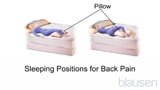
Sleeping in a comfortable position on a medium mattress is recommended. People who sleep on their back can place a pillow under their knees. People who sleep on their side should use a pillow to support their head in a neutral position (not tilted down toward the bed or up toward the ceiling). They should place another pillow between their knees with their hips and knees bent slightly if that relieves their back pain. People can continue to sleep on their stomach if they are comfortable doing so.
Additional measures are needed for chronic low back pain. Aerobic exercise may help, and weight reduction, if necessary, is advised. If analgesics are ineffective, other treatments can be considered.
Sometimes a corticosteroid (such as dexamethasone or methylprednisolone) plus a local anesthetic (such as lidocaine) can be periodically injected into facet joints in the spine or the epidural space—between the spine and the outer layer of tissue covering the spinal cord. The epidural injections may be more effective for sciatica caused by a herniated disk than for lumbar spinal stenosis. However, it is not clear that they produce a long-term benefit. They are usually effective only for several days to weeks. Their main use is to relieve pain enough that an exercise program, which can provide long-term pain relief, can be started.
If a herniated disk is causing relentless or chronic sciatica, weakness, loss of sensation, or loss of bladder and bowel control, surgical removal of the bulging part of the disk (diskectomy) and sometimes part of the vertebra (laminectomy) may be necessary.
For severe spinal stenosis, a large part of the back of the vertebra (the lamina) may be surgically removed to widen the spinal canal (lumbar laminectomy). A general anesthetic is usually required. The hospital stay is usually 4 or 5 days. People may need 3 to 4 months before they can resume all of their activities. About two thirds of people have a good or full recovery. For most of the rest, such surgery may prevent pain and keep other symptoms from worsening.
When the spine is unstable (as may result from a severe herniated disk, spondylolisthesis, or after laminectomy for spinal stenosis), surgery can be done to fuse vertebrae together (called lumbar spinal fusion). However, fusion decreases mobility and may put additional stress on the rest of the spine and cause further problems.
If pain is not adequately controlled, two surgical options are available:
-
Vertebroplasty: A cement mixture is injected into the fractured bone.
-
Kyphoplasty: A balloon is inserted into the fractured bone to create space. The balloon is then filled with cement.
However, recent studies have shown that, in the long term, these surgical procedures are no more effective than nonsurgical options.
-
Low back pain is very common and usually caused by a musculoskeletal disorder of the spine plus other factors, such as fatigue, obesity, and lack of exercise.
-
In young people, low back pain is rarely serious, and testing is usually unnecessary unless symptoms persist for weeks.
-
People who have warning signs or who are over age 55 should see a doctor without delay.
-
Strengthening abdominal and back muscles with specific exercises can help prevent the most common types of low back pain.
-
For most low back pain, avoiding activities that stress the back, taking pain relievers, and sometimes applying ice or heat are sufficient treatment.
-
Prolonged bed rest and traction can delay recovery.
-
In severe cases, for example, when people have abnormal sensation and weakness in the legs, surgery may be needed.
-
Vertebral compression fractures can be treated conservatively (with bracing, pain relievers, and calcitonin nasal spray) or occasionally more aggressively with surgery.
Diffuse Muscle Tenderness in His Back, Chest and Legs
Source: https://www.msdmanuals.com/en-kr/home/bone,-joint,-and-muscle-disorders/low-back-and-neck-pain/low-back-pain
Belum ada Komentar untuk "Diffuse Muscle Tenderness in His Back, Chest and Legs"
Posting Komentar